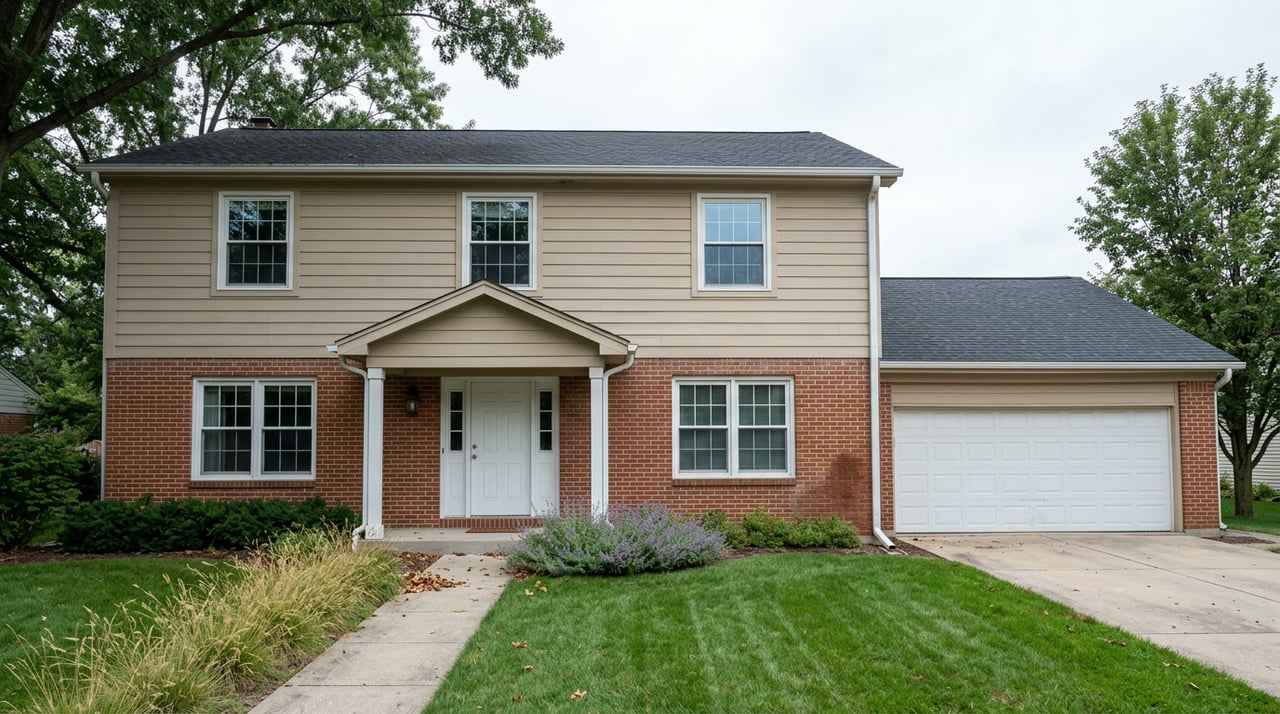
What will the taxes be on this house?
It is one of the first questions buyers ask about any Novi listing, and the answer sitting on the listing sheet is almost always wrong for the person asking it. Not because anyone lied. Because in Michigan, the tax bill printed on a listing belongs to whoever currently owns the home, and that number is frozen in a way that has nothing to do with what the house is worth today.
Here is the mechanism, and why it matters more in Novi in 2026 than it has in most recent years.
The Number On The Listing Belongs To Someone Else
Under the state's Proposal A rules, Taxable Value can only grow each year by the lesser of 5 percent or the state's Inflation Rate Multiplier. For 2026, the Michigan State Tax Commission set that multiplier at 2.7 percent. So as long as an owner keeps a home, their Taxable Value creeps up slowly and predictably, even in years when the actual market value jumps far more.
The moment a home sells, that protection ends. Taxable Value uncaps in the year after the transfer and resets to match the property's State Equalized Value. The City of Novi's own Assessing Department walks through this with a simple illustration: a home bought in March with a Taxable Value of $55,000 stays at that figure for the remainder of that tax year, calculated on the prior owner's capped number. The following year, once the sale has been recorded and neighborhood sales have pushed the State Equalized Value up to something like $90,000, the Taxable Value uncaps and jumps straight to that new figure. The owner's bill is no longer built on a number that crept up 2.7 percent a year. It is built on a number that just caught up to the market in a single step.
That is the gap a buyer inherits. The seller's tax line on the listing reflects years, sometimes decades, of capped growth. The buyer's first full tax year reflects the reset.
What The Reset Actually Costs
Property tax in Novi is not applied at a flat rate across the city. Data compiled from Oakland County property records puts Novi's median annual tax bill at $5,178, with a median effective rate of 1.35 percent, both higher than Michigan's statewide median of 1.05 percent and the national median of 1.02 percent. But the range within Novi itself is the more useful number for a buyer: bills run from roughly $4,024 in the 48375 ZIP code up to $7,450 in 48374, a spread driven largely by which school district levies apply to a given parcel and which local assessment district it sits in.
That spread matters because it shows the millage rate is not really the variable doing the work. Novi's rate, city officials have pointed out, remains one of the lowest in Oakland County even after recent increases. What moves a buyer's bill by thousands of dollars is the base the rate gets applied to, and the base is exactly what uncapping resets. A low rate applied to a freshly uncapped, market-rate Taxable Value can still produce a bill that looks nothing like what the seller was paying.
2026 Adds Three More Numbers To The Stack
A buyer closing in Novi this year is not just absorbing an uncap. They are absorbing it against a backdrop where the city and the school district have both been active on the ballot.
- Novi voters approved a $120 million public safety bond in 2025, adding roughly 1 mill to the tax rate starting with the 2026 tax year. The money is funding a new police headquarters and the relocation of Fire Stations 1 through 3, replacing buildings constructed between 1978 and 1981, along with roughly $20 million to extend Lee BeGole Drive so emergency vehicles have a direct route to the new facility.
- Novi Community School District's debt millage sits at 6.75 mills for 2026, a figure the district has structured its recent bond planning around holding rather than raising.
- The city's Capital Improvement Program millage, a 1-mill levy that funds parks and infrastructure projects like the ITC Park renovation, is set to expire after its July 2026 collection unless voters renew it on the November 3, 2026 ballot. If it lapses, that specific mill goes away. If renewed, the rate stays flat for another decade.
None of these three items is the dramatic driver of a buyer's tax surprise. The public safety bond is a modest, already-priced-in mill. The school district and the CIP renewal are both framed around holding rates steady rather than raising them. The point of listing them is the opposite of alarm: it confirms that Novi's rate side of the equation is stable and comparatively low. The volatility a buyer actually feels comes from the base, not the rate, which is exactly why the uncapping mechanism deserves more attention than the ballot measures around it.
What To Do Before You Write An Offer
A few habits turn this from a closing-day surprise into a number you planned around from the start.
- Ask for the current State Equalized Value, not just the current tax bill. The SEV is the number your Taxable Value will reset to the year after you close, and it is usually available on the same assessment notice or through the Assessing Department directly.
- Run the math yourself using the formula the city publishes to estimate property tax before special assessments or trash collection fees.
- Note that 2026 assessments were built from a sales study covering April 2023 through March 2025, a 24-month window the city says favors taxpayers because it includes older, lower-priced sales. That means recent price gains are not fully reflected yet. A buyer closing in 2026 should expect the SEV, and eventually the Taxable Value, to keep climbing as future sales studies catch up to current prices.
- If the assessed value looks wrong once you own the home, look to the Board of Review after the city mails a Notice of Assessment in mid-February; it meets the second Monday in March.
The Quiet Trade-Off For Long-Term Owners
There is a flip side worth naming honestly. The same mechanism that resets a buyer's bill is what keeps a long-tenured owner's bill artificially low for as long as they stay put. A homeowner who has been in a Novi house for fifteen years is very likely paying tax on a Taxable Value that is a fraction of what the home would assess at today. That is not a loophole. It is exactly what Proposal A was built to do. It just means the math on staying versus selling looks different than the sale price alone would suggest, and it is worth running the actual numbers before assuming a move-up purchase costs only the difference in home price.
FAQ
When does the Board of Review meet? The Board of Review meets the second Monday in March, following a Notice of Assessment mailed in mid-February.
Is Novi's tax rate actually high compared to nearby communities? City officials have said Novi's overall millage remains one of the lowest in Oakland County even with the recent public safety increase. The variation buyers notice within Novi itself comes mostly from which school district and assessment district a specific parcel falls into, not from the city's base rate.
Property tax mechanics are not something a buyer should have to reconstruct alone from a Notice of Assessment and a spreadsheet. If you are comparing homes in Novi and want the actual post-closing number instead of the seller's frozen one, Andrea Yakobe can walk through the math on a specific address before you write an offer. Schedule a quick market consultation or book a showing today.
This article is general information, not legal, tax or financial advice. Consult a qualified professional about your situation.