The City of Northville's Historic District Commission reviews exterior work based on whether a property is inside the district boundary, not on the age of the house.
That boundary is worth understanding before you write an offer, not after.
The Boundary Decides, Not the Deed
Northville's historic district was designated a Michigan State Historic Site in 1970 and added to the National Register of Historic Places in 1972, one of the first local historic districts in the state. The boundary runs roughly along Cady, Rogers, and Randolph Streets, with additions in 2003 and 2007 pulling in properties on the opposite sides of those original streets.
Here's where the assumption most buyers carry into a purchase starts to break down. The National Register nomination identified 73 contributing structures, the homes and buildings old enough and intact enough to count as historically significant on paper. But the Northville Historic District Commission doesn't only regulate those 73. A 2019 intensive-level survey, cited in the city's own request for design-guideline consultants, put the total number of residential and commercial resources inside the boundary at more than 400. That gap between the historic count and the regulated count is not a technicality. It's the whole story.
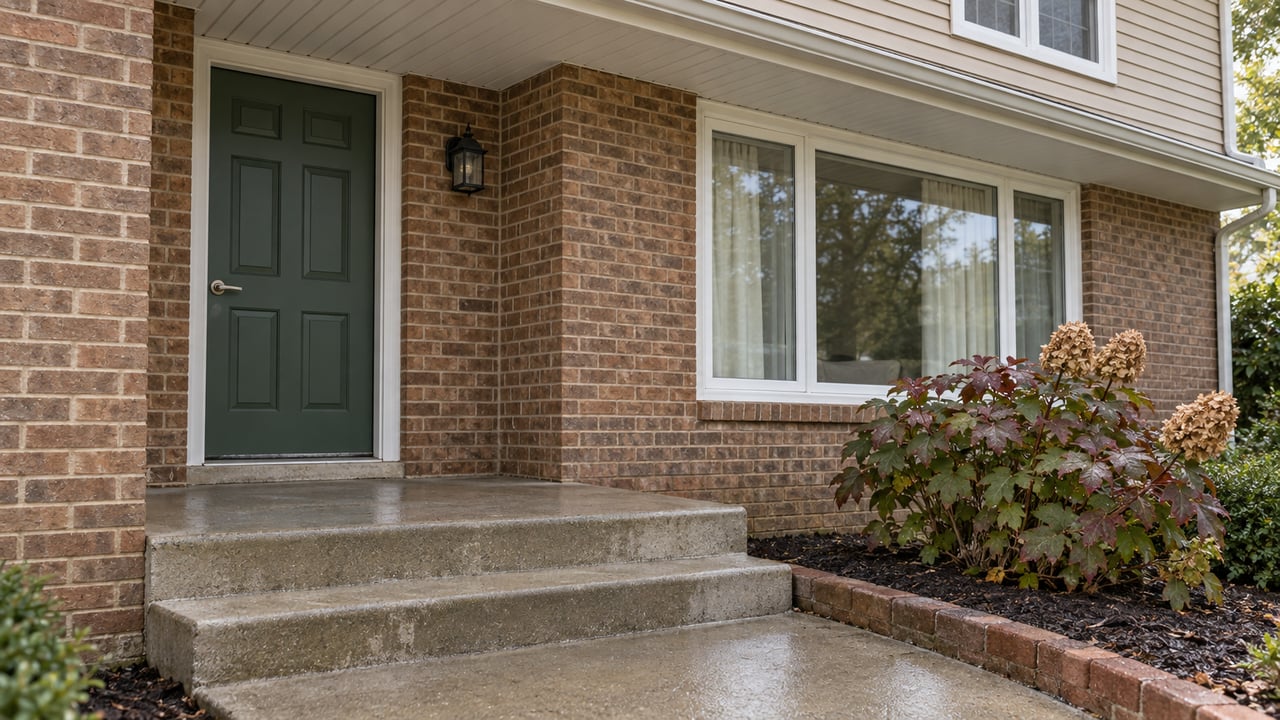
The clearest proof came up in a February 2025 commission meeting. Homeowner Andrew Krenz presented plans to change the siding and front door on his house. City staff noted the home was built in 2006 and is officially non-contributing to the district, meaning it holds none of the historic significance that gives the district its name. It still needed full commission review, including product brochures for the Hardie siding and detailed specifications for a Therma-Tru fiberglass door. The house's age didn't exempt it. Its address did the opposite.
Northville's own ordinance page confirms the scope: the commission reviews construction, alteration, moving, exterior changes, exterior paint colors, and demolition on every building inside the boundary. Interior work is generally outside its reach. Exterior work is not, regardless of when the structure was built.
What Actually Passes
The commission isn't a rubber stamp, but it isn't a wall either. Look at what has cleared review in recent cycles and a pattern shows up: differentiated, well-documented work gets approved.
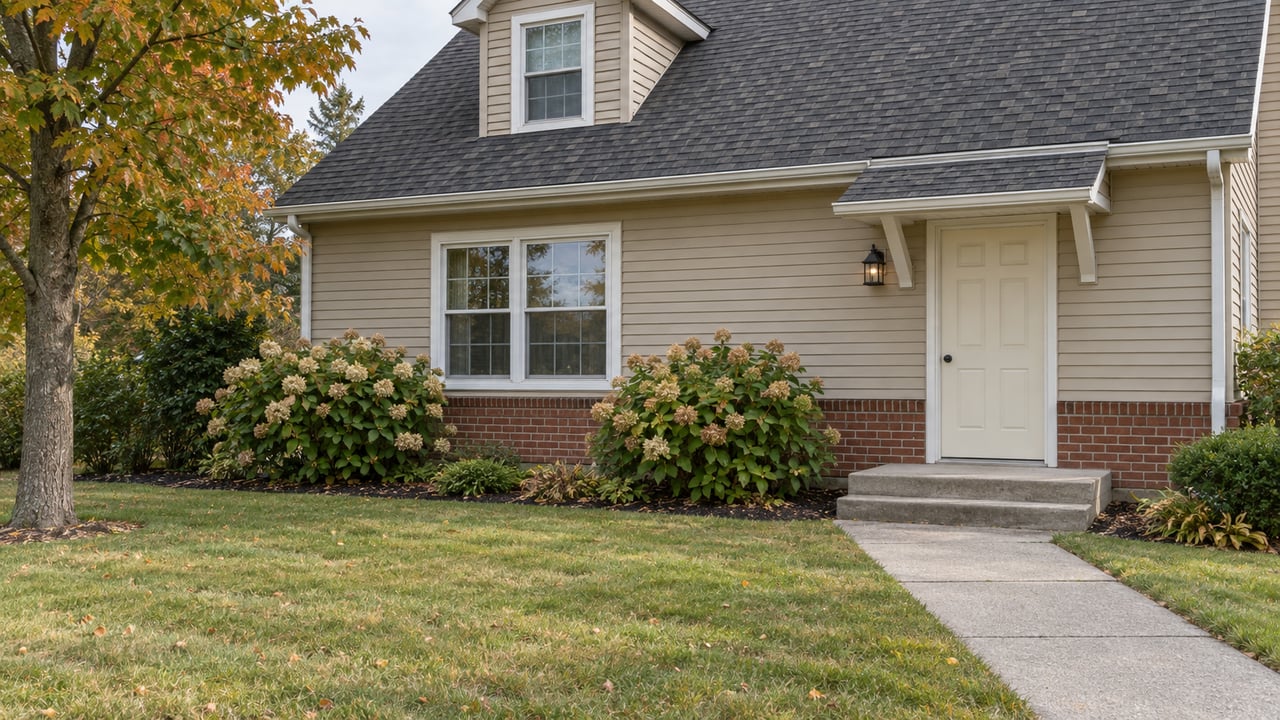
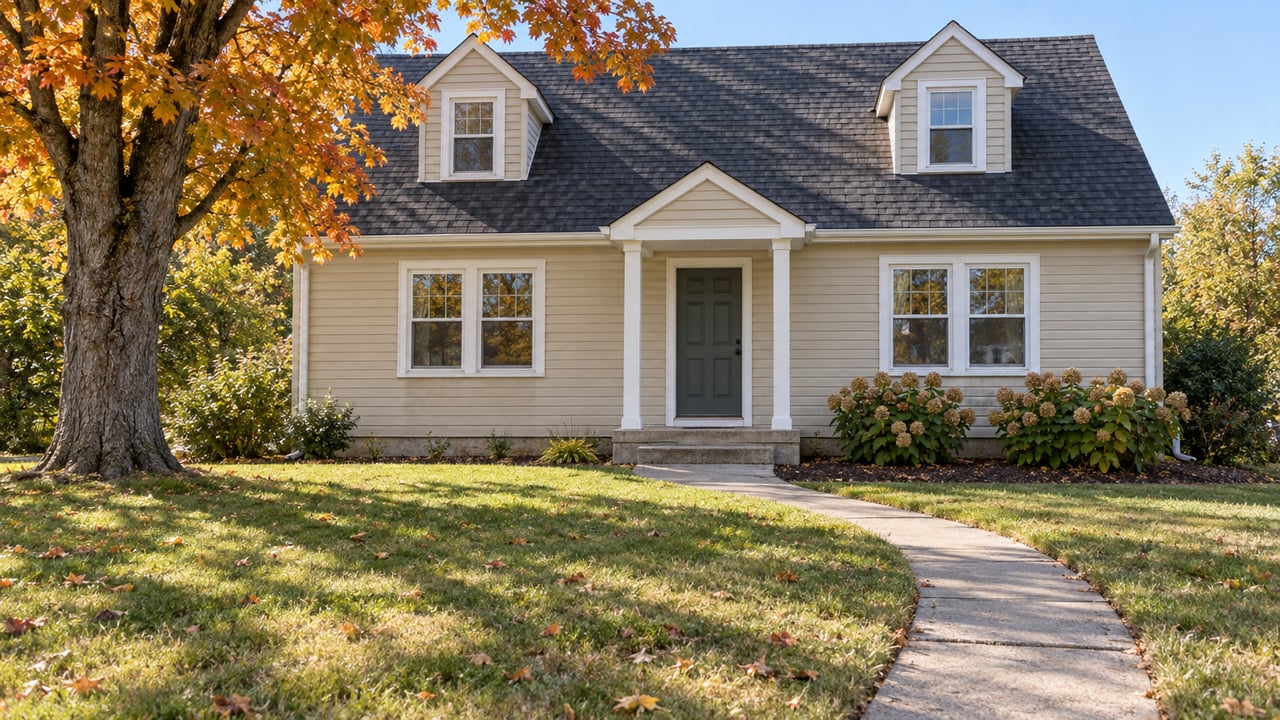
In January 2026, homeowner Raymond Bailey brought plans for a rear addition to his home at 116 S. Rogers Street, a vernacular structure believed to date to around 1845. Working with designer Susan Halfleigh of DiaMonte Design LLC, Bailey's team presented a detailed analysis of the home's original motifs before proposing the addition. The commission approved it unanimously, citing Secretary of Interior Standards 9 and 10, the federal guidelines that call for new work to be compatible with a historic structure without pretending to be original to it. That same address had come before the commission before, back in 2008, when a homeowner replacing the roof got approval for GAF Timberline shingles in Charcoal Blend. Two owners, two projects, eighteen years apart, same house, same board.
Elsewhere in 2025, properties on Linden Street and Linden Court cleared review for roofing materials, siding, window replacement, and paint color, each tied to a specific product spec and a specific design-standard citation in the vote. The pattern holds across commercial storefronts too: a wall sign for a physical therapy practice moving into a larger downtown suite was approved once the applicant matched the size and design of existing signage on the building.
What Gets Sent Back
The flip side matters just as much for anyone budgeting a renovation timeline. A 2008 application for a white vinyl picket fence was denied outright, not deferred, denied, because PVC didn't meet the district's material standards. The commission suggested the applicant discuss alternative materials with staff before reapplying.
More often than outright denial, the commission simply asks for more. A staff memo on a proposed change of exterior materials at 508 W. Main Street noted that detailed product specifications, dimensions, and material samples had not yet been submitted, meaning the commission couldn't complete its evaluation until the homeowner supplied them. The City of Northville requires five paper copies of supporting material plus a digital copy to the Community Development Director before it will even consider an application complete. Miss that step and your project waits for the next meeting cycle, not because the commission objected to the work, but because the paperwork wasn't ready.
The Clock You Have to Build In
The commission meets on the third Wednesday of most months at 6:30 p.m. in City Hall's council chambers. Applications are due roughly three weeks ahead of each meeting under the 2026 submission schedule. If you're reading this in early September and hoping to get siding or roofing work approved before winter, the September meeting has already closed its window. The next chance is the October 21 meeting, with applications due by September 30.
A Michigan renovation contractor who works across several historic districts in the region estimates that commission review typically adds four to eight weeks to a project timeline and can narrow material and design choices on the exterior. That estimate lines up with what the Northville record shows: straightforward requests with complete documentation often clear in a single meeting, while incomplete applications lose a full cycle waiting on missing specs.
Michigan's historic district law, the framework both Northville's city and township ordinances are built on, includes one relief valve worth knowing: if the commission fails to act on a complete application within 60 calendar days, the certificate is considered approved by default. In practice, most applications are decided well before that clock runs out, but it's a useful backstop to understand rather than rely on.
The design standards themselves got a full rewrite recently. Kraemer Design Group, a Detroit-based architecture firm, updated Northville's guidelines under a contract that replaced the 1999 version, with City Council adopting the new document on August 5, 2024. The City of Northville says any future changes to those guidelines require sign-off from the State Historic Preservation Office, so the version in effect now is the one that will govern any project you bring to the commission in 2026 or beyond.
What Happens If You Skip It
For investors weighing a quick flip inside the boundary, this is the section that changes the math. Doing exterior work without a certificate isn't a paperwork oversight the city quietly lets slide. Under the state framework, if the commission finds unpermitted work doesn't meet the standard, it can require the owner to restore the property to its prior condition or modify the work until it qualifies. If the owner doesn't comply, the commission can seek a circuit court order to force the issue, and if that still doesn't resolve it, the commission or its agents can enter the property to do the restoration themselves, with the cost charged back to the owner. That's a materially different risk profile than a typical building-permit violation, and it's one a fast-turnaround renovation budget needs to account for before work starts, not after a neighbor complains.
Before You Write an Offer
A few checks are worth doing before you get attached to a listing inside the district:
- Confirm with the city's Building Department whether the specific parcel falls inside the mapped boundary. Boundary expansions in 2003 and 2007 mean some nearby addresses that look similar are inside while others are not.
- Ask the seller or listing agent whether any exterior work was done in the last several years, and if so, whether a Certificate of Appropriateness was issued for it.
- If you're planning exterior changes soon after closing, check the current meeting calendar and submission deadlines before you set a renovation start date. A single missed deadline can push a project a full month or more.
- Request the 2024 Kraemer Design Group guidelines for the specific project type you're planning. Roofing, siding, windows, and fences each have their own standard, and the commission's votes consistently cite these sections directly.
Two Questions Worth Asking Directly
Does this apply if I only want to repaint the trim? Yes. The commission's charge explicitly includes exterior paint colors, not just structural changes. Color changes have their own standard citation in commission votes.
What if my house was built well after the historic period, like the 2006 example? Being non-contributing does not remove the requirement to apply. Location inside the boundary is what triggers review, not the age of the structure.
If you're weighing a historic Northville property, whether to live in or to renovate and resell, the review process is a real cost center and a real timeline item, not a footnote. Andrea Yakobe works through these details with buyers and sellers across Metro Detroit every week, including the ones who assumed their exterior work would be a simple weekend project. Schedule a quick market consultation or book a showing today, and get the timeline right before you're mid-project.
This article is general information, not legal, tax or financial advice. Consult a qualified professional about your situation.