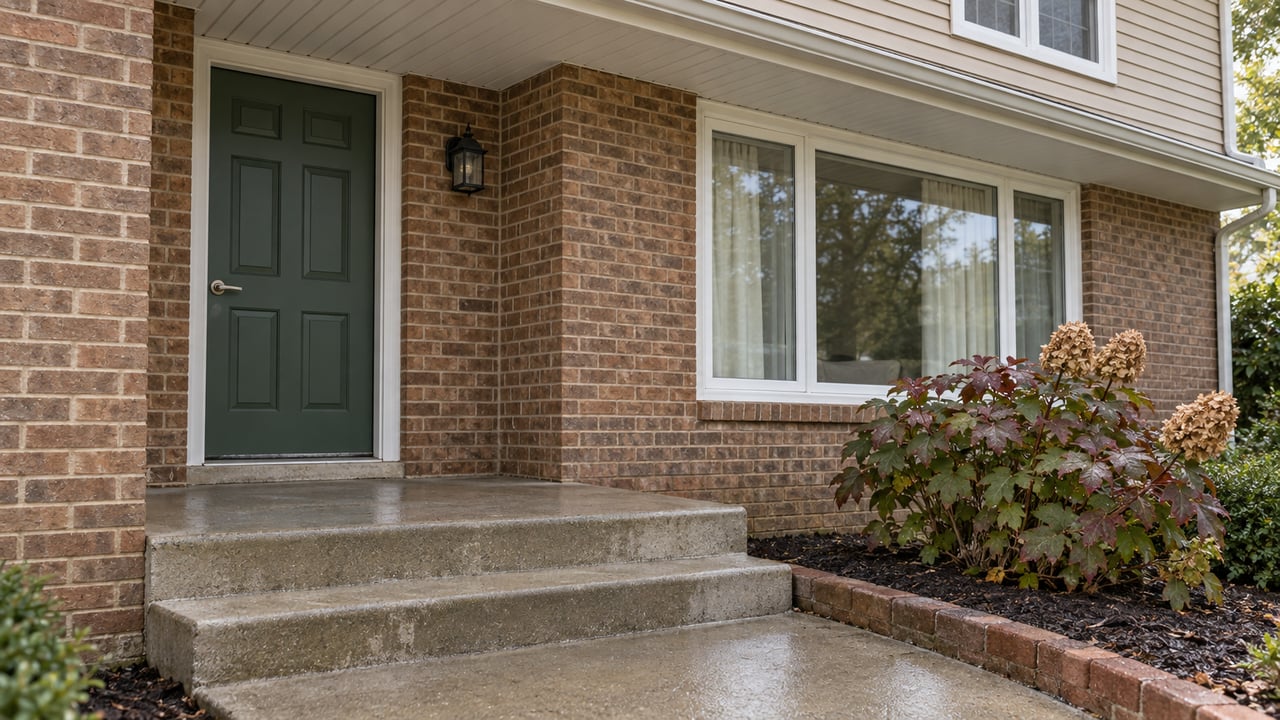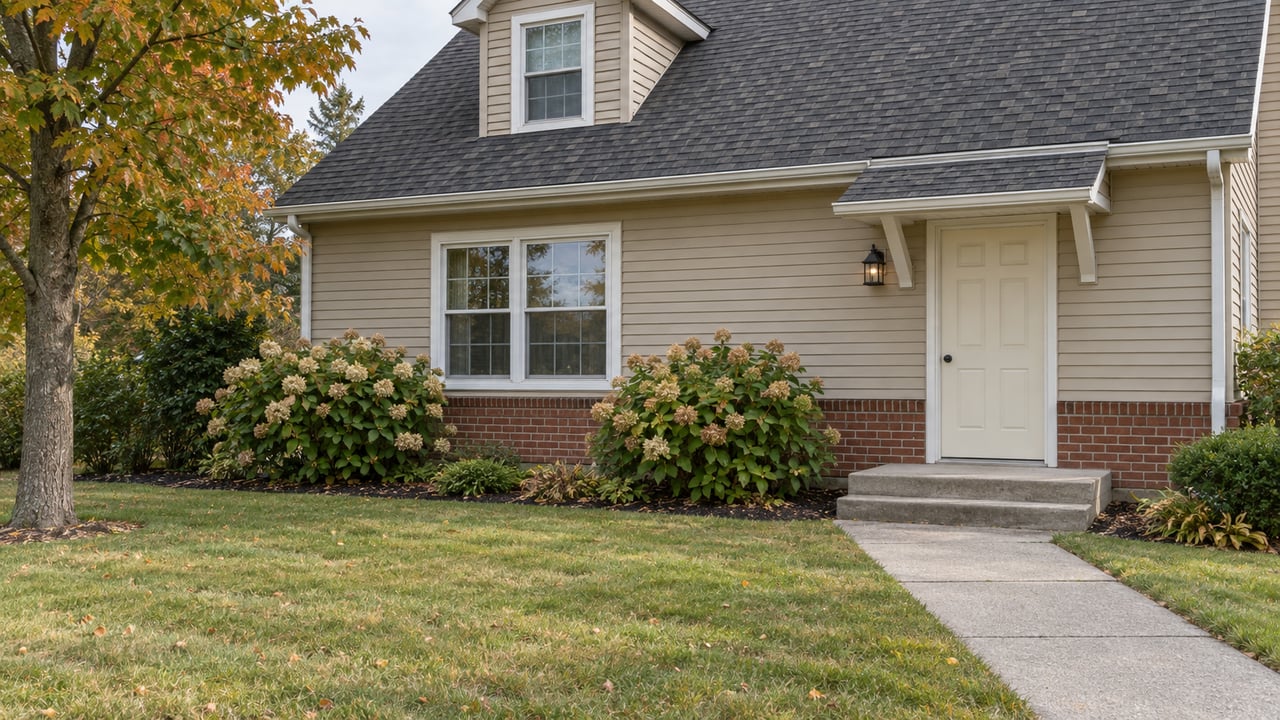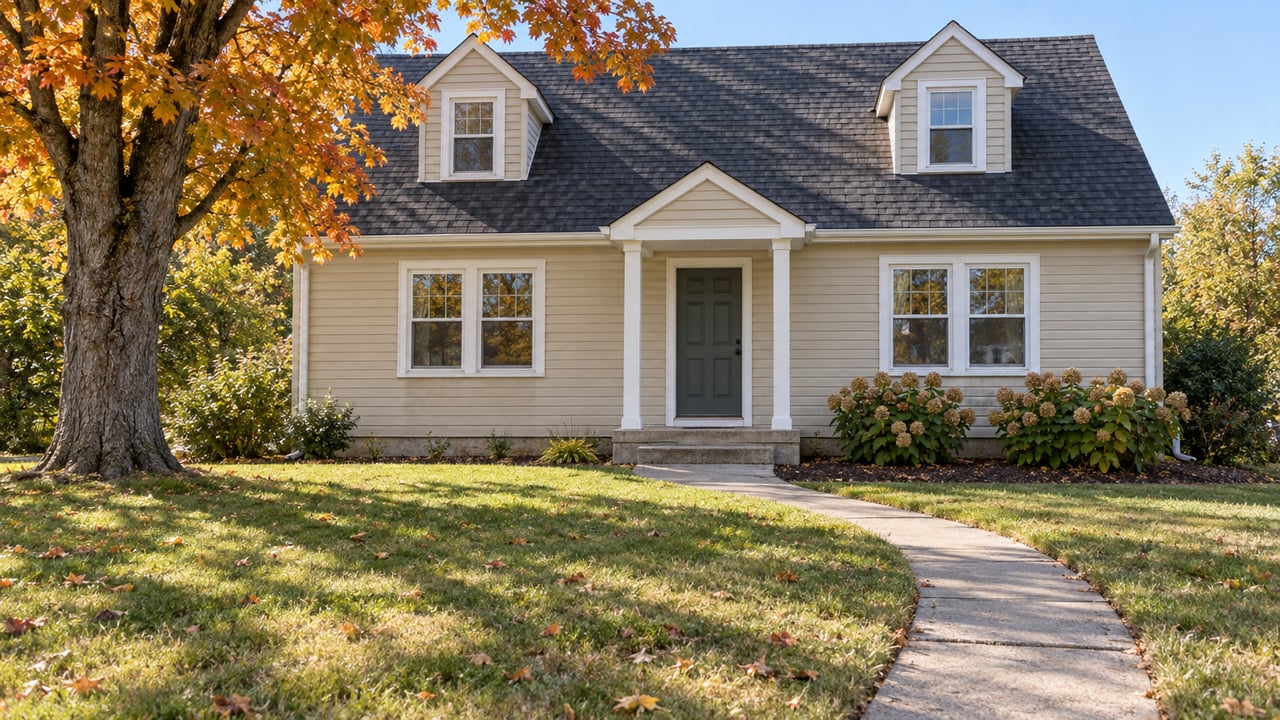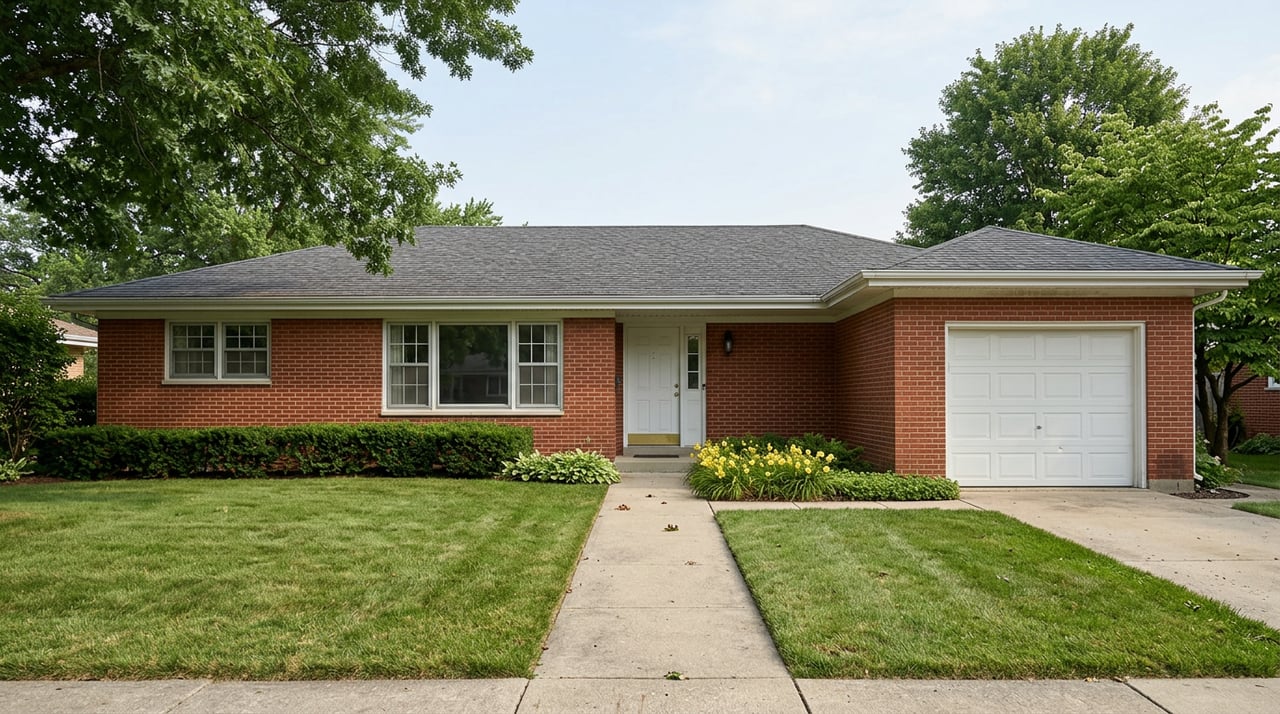
Two buyers walk into Farmington Hills with the same $385,000 budget. One writes an offer on a 1,200 square foot ranch on the west side. The other bids on a colonial in a subdivision east of Orchard Lake. On the portal, both homes look like the same city at the same median. Six days later, both are pending. Five years from now, they will not be the same asset.
That gap is the story the median hides. And in June 2026, with inventory tight and homes moving in under three weeks, most buyers are making that decision without seeing it.
The Median Is Doing Less Work Than You Think
The headline numbers are close enough to agree on. As of June 2026, Farmington Hills homes were listed at a median price of about $385,000, or roughly $157 per square foot, down about one percent year over year. Redfin's three-month window ending April 2026 put the median sale price at $350,000 with homes selling in about 17 days. Houzeo's March 2026 read had inventory at 1.6 months of supply and a sale-to-list ratio just above 100 percent.
Those numbers tell you the market is tight. They do not tell you what you are buying.
Farmington Hills has two dominant residential vintages sitting on top of each other. Mid-century ranches, mostly built between the 1950s and 1970s, typically run 1,000 to 1,500 square feet on generous lots. Colonials, the most common style in the city, are usually two-story homes with four or five bedrooms and 2,000 to 2,500 square feet in later subdivisions. They do not price the same way, and they do not appreciate the same way.
| Style | Typical range (Spring 2026) | Common profile |
|---|---|---|
| Ranch, dated | Mid $200Ks | 3BR, 1,000–1,200 sq ft, original kitchen/bath |
| Ranch, updated | $300K–$400K | 3BR, open floor plan, renovated kitchen |
| Colonial, older | $300K–$400K | 4BR/2.5BA, 1970s build, unrenovated |
| Colonial, updated | $400K–$550K+ | 4BR/2.5BA, ~2,500 sq ft, modern kitchen |
| Custom/estate | $600K+ | Ramblewood, Strathmore, Normandy Hills |
A $385,000 offer buys a very different piece of housing stock in each row. The updated ranch is trading at a premium because downsizing buyers want one-level living and there is not enough of it. The unrenovated colonial at the same price is being bid up on square footage and school access. Neither is wrong. They are simply different bets on where demand goes next.
The Ranch Premium Is Real, And It Is New
Two years ago, ranches in Farmington Hills sat below colonials on a per-square-foot basis. That has changed. Updated ranches with open floor plans are now commanding prices that would have looked steep in 2023, driven by downsizers who want to leave two-story homes without leaving the city.
Two friction points show up in the transaction itself:
- Appraisals lag the premium. A ranch that sells at $350,000 in a neighborhood where the last three ranch comps closed between $290,000 and $315,000 can appraise short. Buyers financing more than 80 percent are the ones exposed. Cash offers on ranches are winning partly because of this.
- Original systems are the negotiation. A 1965 ranch with an original electrical panel, a 25-year-old furnace, and galvanized supply lines is not a $350,000 house until those items are addressed. Sellers who have kept the roof and mechanicals current are pricing at the top of the range and getting it. Sellers who have not are seeing inspection responses reset the deal.
If you are shopping ranches, the offer conversation should be about mechanicals before it is about price.
The Grand River Corridor Is A Second Mechanism
The other thing the median hides is that Farmington Hills is not going to look the same in five years, and the change is concentrated in one geography.
The Grand River Corridor Improvement Authority district runs from Orchard Lake Road to 8 Mile and Inkster. It is a joint effort between Farmington Hills and neighboring Farmington, funded through tax increment financing, and it has been quiet for most of the last decade. It is not quiet anymore.
In her March 2026 State of the Cities address, Mayor Theresa Rich outlined a five-year strategic plan built around $41 million in infrastructure spending planned for 2026, following $38 million in 2025. A 2025 market study by Gibbs Planning Group, reported by The Detroit News, showed the Farmington Hills side of the corridor already captures about $1.2 billion in annual restaurant and retail spending, and identified demand for 20 additional restaurants or retailers and 400 to 500 new housing units within the corridor.
The city has also positioned the tools to move that demand. A facade improvement grant of up to $30,000 and a Brownfield grant of up to $200,000 are on the table for developers taking on obsolete buildings, and the city is targeting properties like the Farmington Junction building at 31505 Grand River for redevelopment. The Grand River Corridor site has the current project map.
For a buyer, this is not an abstraction. It is the difference between buying a home two blocks off Grand River east of Orchard Lake, where a walkable district is being built, and buying an identical home in a subdivision that will look the same in 2031 as it does today. Both can be good purchases. They are not the same trade.
What Your Money Actually Buys, Read Through Both Lenses
Layer the two mechanisms and the choice sharpens. At $385,000 in June 2026, a Farmington Hills buyer is generally choosing among:
- An updated ranch in an established subdivision west of Middlebelt. Priced at the top of its band. Downsizer demand supports resale. Little exposure to corridor redevelopment either way. This is a stability bet.
- An older four-bedroom colonial in a mid-market subdivision like Rolling Oaks or Woodcreek. More square footage per dollar. Value depends on how much of the kitchen and bath work has already been done. Appreciation will track the broader Oakland County market.
- A home within a mile of Grand River east of Orchard Lake. Below-median pricing on some blocks. The upside is corridor-linked. The risk is timing: TIF-funded redevelopment moves in years, not quarters, and construction disruption is part of the near-term picture.
- A condo, entry ranch, or aging colonial in need of work. Real inventory in this band. Requires a rehab budget and a lender comfortable with the property's condition. The most common trap is underestimating mechanicals on a 1960s house.
For the price gap against neighbors, the comparison worth running is not Farmington Hills against Novi or Northville in the abstract but style against style. A June 2026 buyer looking at a Northville home listed near the city's roughly $625,000 median is not comparing it to a Farmington Hills ranch. They are comparing it to an updated Farmington Hills colonial in the mid-$400s, and the delta pays for a school district and a walkable downtown, not for the house itself.
Transaction Frictions Specific To This Market
A few things surface once you are actually writing offers:
- The market is fast but not indiscriminate. Zillow's data has homes going pending in about six days on average, but that is the well-prepared, correctly priced listing. Homes that sit past 30 days almost always have a condition or pricing issue that will not fix itself with a small reduction.
- Sale-to-list around 100 percent means overpricing gets punished. A home listed 8 percent above comps is not selling for that number. It is sitting, taking a price cut, and then trading below where it would have if it had been priced correctly on day one.
- Inspection leverage runs both ways. In a 1.6-month supply market, sellers are less willing to negotiate cosmetic items. They are still negotiating structural, roof, and mechanical items when the inspection surfaces them, because those items will show up on the next buyer's inspection too.
- Corridor-adjacent properties need a longer horizon. If you are buying within the CIA district for the redevelopment thesis, a five-to-seven-year hold is the realistic frame. TIF-driven change is slow by design.
FAQ
Is Farmington Hills still cheaper than Novi and Northville in 2026? Yes, on a citywide median basis. June 2026 medians run about $385,000 in Farmington Hills against roughly $498,000 to $500,000 in Novi and around $625,000 in Northville. The gap narrows once you compare updated colonial to updated colonial.
Will the Grand River redevelopment raise my taxes? The CIA uses tax increment financing, which captures the growth in property tax revenue within the district for reinvestment in the district. It does not raise millage rates directly. Individual assessments still move with market value.
Are ranches a better resale bet than colonials right now? Ranches are outperforming their historical range because of downsizer demand, but the supply is small and updated inventory is what is moving. A dated ranch is not automatically a fast sale.
How much should I budget for mechanicals on a 1960s Farmington Hills home? That depends on the specific house, but any inspection on a home of that vintage should be treated as a diligence exercise, not a formality. Roof, furnace, electrical panel, and supply lines are the four line items to price out before waiving contingencies.
If you are trying to figure out which of these four buys fits your situation, or you own a Farmington Hills home and want to understand where it actually sits inside the style bands and the corridor map, Andrea Yakobe can walk through the numbers on your specific block. Schedule a quick market consultation or book a showing today.